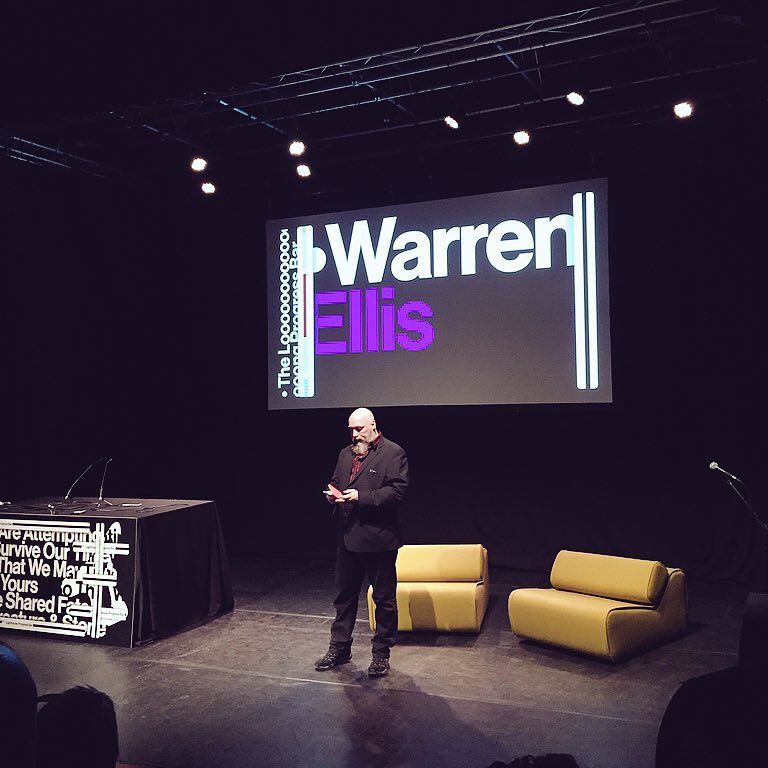
SF Magazines: Some Fudged Numbers

October 29th, 2007 | brainjuice

It’s been pointed out to me that these magazines pay for shit. They pay rates that I wouldn’t work at — $50/1000 words, more or less. I once heard a writer call it “a charitable donation.” Given that one of the digests, at least, will contain some 100,000 words, that’s a creative budget (before art) of $5000/issue. Which I’d like you to turn around in your head for a few moments.

I’d like to know some numbers, I really would.

Consider that a magazine like ASIMOV’S or F&SF, who sell 15000 in subscriptions and 5000 at newsstand at a cover price of $3.99, constitutes a theoretical gross of some $80000. Fudged number, sure, but in the ballpark. What does that break down to?

Well, 55% of your 5000 copies just vanished, because the distributor took it. 55% is the cost of doing business in the returnable-sales game, which in this instance means $11000 of the $20000 you made from your sell-through of 5000 copies. So you’re down to $69000.

But those 15000 other copies are subscription, so your distribution is the cost of mailing them. And the three big US mags give you some 25% off the cover rate to subscribe. So you’re down to an imaginary number of ($45000 + $9000) $54000 before you even pay the postal service.

What does it cost to mail those things? I assume there has to be discounts available to post 15000 copies of something, so it’s got to be worth the magazine’s while even though they’ve given up 25% of cover price (or $15000). And if you’re keeping score, you’ve noticed that you’ve shed more than a quarter of your imaginary gross just through the cost of doing business. Running a magazine is, in fact, a job for crazy people.

What’s the unit cost on printing? These things are printed on pulp in relatively large runs, the printing bill can’t be too onerous. I mean, it’d be pointless selling to newsstand at all if the unit cost was more than a couple of bucks — and they have to be printing 15000 copies for newsstand for them to sell 5000 at a 32% sellthrough as reported for ASIMOV’s. A total print run of 30000 minimum. A unit cost of $1/copy would break them. You’ve got to assume the unit cost is way under a dollar.

The ballpark for the writing budget is $5000. Call it $1000 for art? That’s another $6000, plus whatever you allow for production. And even though we’re missing hard numbers to plug in here, you can see that it’s all got to come out of a pool of $54000. What if it costs fifty cents to print a copy and fifty cents to send one? That’s a minimum of $22500.

Here’s another number – ASIMOV’S lost 3000 subscribers last year. Using the above as a rough mark, that’s clearly at least $6000 per month taken out of their calculations for this year. Or: their entire creative budget per month.

ASIMOV’S and ANALOG are part of a large magazine group, and so their printing bills should be a lot less due to gangprinting and other cost-saving elements, and also their salaries ought to be payments amortised across the entire company rather than pegged to the magazine’s takings. They’d only go into the red when (budget+print bill+circulation costs) > (subscription fees + sellthrough). F&SF, I believe, doesn’t have that kind of buffer.

I really wish I had those missing numbers tonight.

(UPDATE: someone pointed out in email that there are also ad revenues to take into account — also, that when there’s ad space to burn there’s crosspromotion to be had.)

Science fiction is going to lose at least one of these magazines in the next five years. This is where other people say to me, “that’s why we’ve gone to the web.”

2 Responses to “SF Magazines: Some Fudged Numbers”

  1. [...] Ellis on the grim future of science fiction magazines. Some of the previous posts he mentions, and response to one from Cory Doctorow (unsuprising short summary: Blogs!). Jason [...]

  2. [...] Subscribe Warren Ellis on the grim future of science fiction magazines. Some of the previous posts he mentions, and response to one from Cory Doctorow (unsuprising short summary: Blogs!). Jason [...]

Coilhouse is Hiring! Apply Here.

Coilhouse - 08 Feb 10

Back around the time of Issue 03, we launched the Small Business Advertising Program to create affordable ad space for indie companies in the print version of Coilhouse. By the time Issue 04 rolled around, the number of advertisers had grown significantly – by this time, we had record labels, jewelry and clothing designers, sculptors, other magazines, web hosts, toy makers and graphic designers advertising in our pages. Click here to see them all. With editorial duties taking up more and more of our time as the weeks go by, the moment has come for us to seek help with the advertising side of running the magazine. We’re looking to hire an Ad Manager for our Small Business Advertising Program, starting with Coilhouse Magazine #05… and possibly subsequent issues.

Full details after the jump!


Read the rest of Coilhouse is Hiring! Apply Here.


Post tags: Coilhouse

Untitled Post

blissblog - 08 Feb 10

Untitled Post

blissblog - 08 Feb 10

Untitled Post

blissblog - 08 Feb 10

State of South Carolina Secretary of State Subversive Agent Form

jwz - 08 Feb 10

Check the appropriate box. Do you or your organization directly or indirectly advocate, advise, teach or practice the duty or necessity of controlling, seizing or overthrowing the government of the United States, the state of South Carolina or any political division thereof?
[ ] YES [ ] NO

If yes, please outline the fundamental beliefs. If applicable, attach a copy of the bylaws or minutes of meetings from the last year.

"Inflection Points" Presentation

Open The Future - 08 Feb 10

For those folks who are interested, here's the Slideshare version of the presentation I gave last week at the Earthquake Engineering Research Institute annual meeting. I was asked to talk about foresight thinking, as the event theme was "The Big One of 2056: What Went Right?" a look at a fictional 7.8 quake in the SF region that was handled as well as they could imagine possible.

My goal was to offer a bit of reassurance to the audience that there is some real utility to thinking about the future, and to spell out (in a cursory way) the kinds of big picture issues they should keep in mind while looking ahead forty-six years.

By and large, it was a successful talk. The post-talk questions were engaged, with little push-back, and I'm told that the overall response from the audience was quite positive.

The talk was video recorded, and I'm told will eventually be available to the public. I'll link when that happens.

CAN GIFTING ECONOMIES SCALE?

John Robb - 08 Feb 10

A gifting economy is different from a barter or market economy in that valuable items are given away to those that need them, without any quid pro quo, exchange, or payment.  Gifting economics (lots of great papers on this topic) were/are the economic heartbeat of hunter-gatherer tribal cultures, the social organization where we spent 99% of our time as homo sapiens sapiens.  Barter was, in contrast, a mechanism for economic interactions between tribes.  

This gifting economic system wasn't based on pure altruism.  It did have an enforcement mechanism to ensure compliance with the system over the longer term.  On the positive side, there was an intangible increase in the social status (using personal or societal metrics) of a tribal member that gifted an item.  On the negative, a failure to offer hospitality or gifts to those in need was considered a mortal slight that could incite violence or expulsion from the tribe.

There were also a considerable number of drivers for gifting at the tribal level.  Here are some:

  • The survival of the tribe, as a group, was more important than the survival of any individual.  However, the loss of any individual could put the tribe at risk.
  • The generation of surplus and innovation was highly uncertain.  Sharing reduced that uncertainty to manageable levels.
  • Sharing reduced internal friction that could put the tribe at risk.

Scalability

It's pretty clear that the societal drivers of tribal gifting economics and the mechanisms of enforcement didn't survive the transition to a global social system composed of billions of members.   Simply, the connections between any two individuals (outside of immediate familial relationships) are too abstract for these drivers and enforcement mechanisms to be relevant.   As a result, market based mechanisms for economic interaction have gained dominance.

However, the ongoing shift of the global market-based economy from a trade in rival goods (tangible items that invoke zero sum economics) to digital non-rival goods (items that can be copied at no expense or diminishment, endlessly) provides a window of opportunity.  It may be possible to revive gifting economics for non-rival goods to amazing beneficial effect.   Some ideas on how this could scale:

  • Automated reputation metrics that enhance social status based on contributions.
  • Mechanisms built using MMO gaming as a way to tie successful gifting to status improvement (leveling) or an ability to attract investment.
  • The creation of an inside/outside barrier that separates a gifting economy from the global economic mainstream.   Automated mutual interdependence (see my friend Bruce Sterling's absolutely brilliant story on this:  "Maneki Neko").

Latest on SNOW

Jean Snow - 08 Feb 10

Latest on SNOW

So what’s the latest on SNOW? I guess two new developments art that I added a dedicated Twitter feed, and also created a Facebook fan page. The Twitter feed is mostly just automated with new articles from the site — because some people actually prefer that over RSS feeds these days — but I do keep an eye on it, and will reply to questions and comments. The Facebook page is just another way of putting the site out there, and should be a good way of informing members of SNOW-related events as they happen.

Regular content updates have also continued over the past week, with a few new guest columns and my regular news items. Here’s a list of what you may have missed over the past few days.

Untitled Post

blissblog - 08 Feb 10

I Know It?s Over?

Kieron Gillen - 08 Feb 10